

Outbound sales October 7, 2026 12 min read
What €1M+ SaaS Companies Get Wrong About Outbound
Discover why outbound fails for most SaaS companies past €1M ARR — the ICP, messaging, and process mistakes killing your pipeline in 2026.
Read MoreOutbound Hub insights
September 13, 2026 11 min read
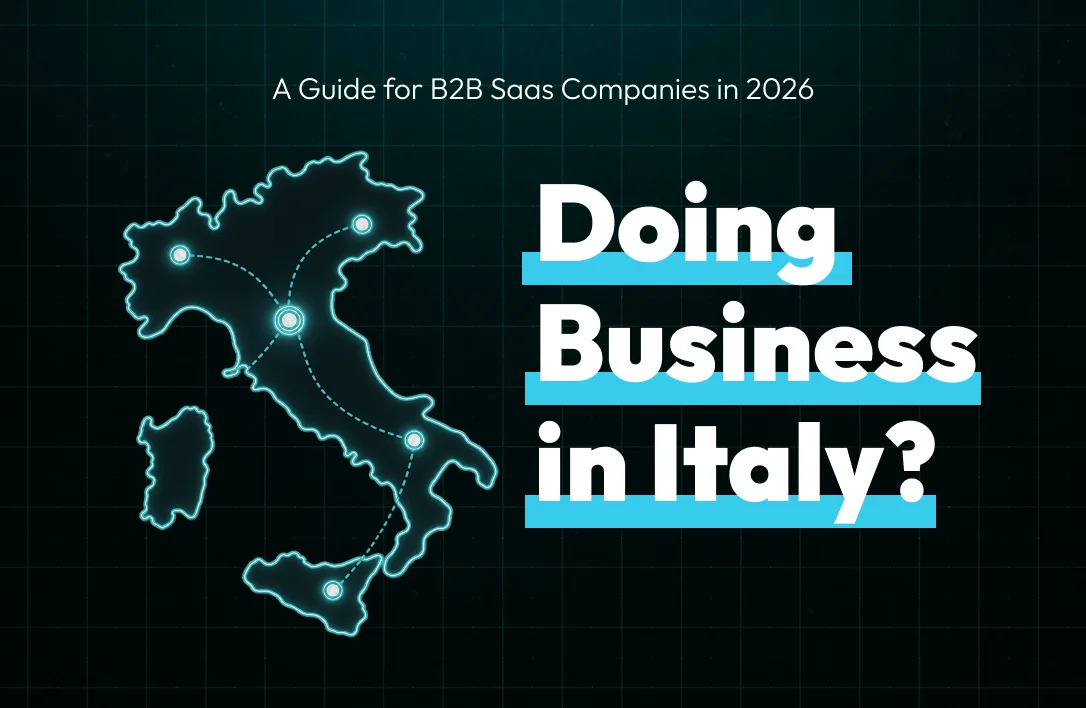
Italy is one of Europe’s largest economies and one of its most overlooked SaaS markets. Many software companies expand into Germany, France, or the UK first, then treat Italy as an afterthought, translate the website, send a few English emails, and wonder why nothing lands.
The companies that do well in Italy tend to do one thing differently: they treat it as a market with its own buying habits, not as a language setting. Trust comes before contracts, relationships shape deals, and local expertise often decides whether a first conversation happens at all.
This guide covers why Italy is worth the effort, how Italian B2B buyers actually behave, how to build a go-to-market approach that fits, and the practical, legal, and cultural details worth getting right before you launch.
Italy has a large base of small and mid-sized businesses, a strong industrial and export tradition, and a growing push toward digitalization supported by national and EU-backed initiatives. Many of those companies still run on spreadsheets, legacy systems, or disconnected tools, which means real room for software adoption rather than just competitive switching.
Market size estimates vary by source and definition, but the Italian SaaS market is commonly cited at several billion euros, with figures around €4 billion often mentioned for 2026, and it continues to grow. Competition is also lighter in many niches than in more saturated Western European markets, and Italian-language search is a good example: many software keywords have lower competition than their English equivalents, yet still carry strong buying intent.
Italy is attractive for B2B SaaS because it has a large SME base, ongoing digital transformation, growing cloud adoption, and less competition in many software categories than more saturated European markets, especially in Italian-language search.
Italy’s economy is built on small and mid-sized companies, often family-owned, spread across strong regional clusters. Lombardia, Veneto, Piemonte, and Emilia-Romagna in the north are commonly the heaviest B2B spenders, with Milan as the main commercial and tech hub and Rome as the center for public sector and large enterprise. The South is smaller in commercial density but shows growing digital adoption.
Buying decisions usually involve several people. Committees of three to eight stakeholders are common, and decisions often move by consensus rather than through a single champion, which lengthens the process. Sales cycles commonly run from six months to well over a year depending on deal size and segment, so plan cash flow and pipeline coverage accordingly.
Italian business is relationship-first. People generally want to know who you are before they discuss what you sell, and trust tends to come before contracts rather than after them.
A few cultural points matter in practice:
Start with the segments where software needs and buying power overlap. Manufacturing, automotive supply chains, logistics, professional services, and export-oriented firms are common fits, and Italian SMEs in the 11 to 200 employee range are often the sweet spot for B2B SaaS.
Segments using firmographics you can actually filter, including region, ATECO code (Italy’s business classification system), company size, and tech stack. Also define the real buyer: in a family-owned firm, the decision maker may be an owner or a small circle you won’t find through a standard org chart. Your ICP should reflect that, and it should be validated against real Italian closed-won data as soon as you have any, not assumed from other markets.
A workable Italian strategy usually combines four elements: a localized product and website, a targeted outbound motion, local credibility, and patience.
Begin with a focused segment and region rather than trying to cover the whole country. Build referenceable customers early, since local case studies carry more weight than global logos. Combine outbound with events and industry trade fairs, which remain effective for B2B lead generation in Italy, and plan for a longer ramp than in faster-moving markets.
Lead with relevance and respect, and keep the first ask modest. Italian buyers can be skeptical of unsolicited cold outreach, especially generic English-language messages, so specificity and a personal tone matter more than volume.
Trust building is gradual. A business lunch or a face-to-face meeting can do what ten emails cannot.
Use a multichannel approach, weighted toward the channels Italian buyers actually respond to.
Phone often outperforms email for engagement, especially with owners and managers of traditional businesses, provided the call is polite, brief, and relevant. LinkedIn works best for tech, finance, and younger or internationally minded professionals, and it is a good place to warm a prospect before calling. Email can work well in tech and finance sectors when it is localized and specific. Events and trade fairs remain a strong source of leads, particularly in manufacturing and industry verticals.
A coordinated sequence across LinkedIn, email, and phone, in Italian, generally beats any single channel used alone. For sequence structure, see our guide to building a multi-channel outbound sequence.
Localization goes beyond translation. Adapt tone, examples, pricing display, and even feature emphasis so the product feels made for Italian businesses.
For your website, publish native Italian pages rather than machine-translated ones, and research the search terms Italian buyers actually use, such as “software gestionale per PMI” or “CRM per piccole aziende,” which often reflect local phrasing rather than direct translations of English keywords. Localize case studies, support, legal pages, invoicing details, and proposals, and make sure the formatting looks polished. Italian-language proposals and materials signal commitment to the market.
Build pipeline in layers. Start with a tight, ICP-matched, regionally segmented list. Add signals such as hiring, funding, or technology changes to prioritize timing. Run a multichannel sequence in Italian, then move promising conversations toward a call or meeting quickly, since Italian buyers often expect real contact before committing.
Plan for pipeline coverage to reflect a longer cycle, and track stage velocity, meeting-to-opportunity conversion, and cost per qualified meeting, not just activity. Nurture prospects who aren’t ready, since relationship equity in Italy compounds over time.
Local expertise is often the difference between a market that opens and one that stays closed. Native Italian SDRs understand tone, formality, regional nuance, and how to read hesitation, and they can hold phone conversations that feel natural rather than scripted.
Hiring local reps or working with a local partner is generally faster and more credible than managing everything remotely from another market. A hybrid approach also works: an outsourced native-speaking SDR team to test the market, then in-house hires once the playbook is proven. If you hire employees in Italy, get advice first, since it can create tax and legal obligations.
Italy has a large SME base, ongoing digital transformation, and lighter competition in many software niches than more saturated European markets.
Estimates vary by source and definition, but the Italian SaaS market is commonly cited at several billion euros, with figures around €4 billion often mentioned for 2026.
Relationship-first, fairly formal, and trust-driven. Buyers generally want to know you before they buy from you.
Often by consensus among several stakeholders, sometimes with strong influence from owners or family members in smaller firms.
It is not strictly required for every deal, but Italian-language outreach, proposals, and support significantly improve response and trust.
A mix of phone, LinkedIn, and localized email, supported by events and trade fairs. Phone often works better than in many other markets.
Use native Italian copy, research local search terms, adapt case studies and pricing display, and localize legal and support content.
Longer sales cycles, cultural and language gaps, GDPR and legal compliance, tax setup, and building trust as a foreign vendor.
Commonly six to eighteen months depending on deal size, segment, and number of stakeholders.
Usually yes, or partner with a local team. Native reps understand culture, language, and regional nuance, and they tend to build trust faster.
English-only outreach, translation without localization, impatience with sales cycles, and ignoring compliance and regional differences.
Often yes, especially for larger deals, though video and phone conversations are increasingly accepted.
It can be, especially in tech and finance, if it is localized, relevant, and respectful. Generic English blasts perform poorly.
Lombardia, Veneto, Piemonte, and Emilia-Romagna are commonly the strongest B2B markets.
Be formal, specific, and patient, use warm introductions where possible, meet in person when you can, and follow through consistently.
Typically multi-stakeholder and consensus-oriented, with owners or senior figures holding significant influence in smaller companies.
Yes. GDPR applies across the EU, and Italy has additional rules, including a telemarketing opt-out register. Confirm your approach with legal counsel.
Yes, especially for tech, finance, and internationally minded professionals, and as a warm-up before calls.
Localized, high-intent phrases such as “software gestionale per PMI” and “CRM per piccole aziende,” validated with local keyword research.
Very. Italian-language, well-formatted proposals signal respect and seriousness and can influence buyer confidence.
Italy rewards companies that treat it as its own market. The opportunity is real, with a large SME base, digital adoption still growing, and less competition in many niches, but it opens through trust, local language, and patience rather than volume.
Start narrow, localize properly, build local credibility, and invest in native expertise. Get legal and tax basics right early, and let relationships, not just sequences, drive your pipeline.
Related articles
Outbound sales October 7, 2026 12 min read
Discover why outbound fails for most SaaS companies past €1M ARR — the ICP, messaging, and process mistakes killing your pipeline in 2026.
Read More
GTM strategy October 4, 2026 10 min read
Your ICP checks every box but deals still don't close. Here's why ICP targeting fails in B2B sales — and how to fix it with real data.
Read More
Outbound sales October 1, 2026 10 min read
Learn how to build a multi-channel outbound sequence that actually works in 2026 — channel mix, touch count, templates, and benchmarks.
Read More
Lead generation September 28, 2026 9 min read
Learn the 7 buying signals your sales team should track in 2026 — from pricing page visits to executive hires — and how to act on each one.
Read More
SDR September 25, 2026 10 min read
SDRs hitting their meeting quota but pipeline still falling short? Here's why booked meetings don't equal pipeline — and how to fix it.
Read More
GTM strategy September 22, 2026 11 min read
Why the foreign playbook doesn't work in Italy: cultural gaps, translation traps, and trust barriers, plus how to build an Italy-specific strategy.
Read More
Enterprise sales September 19, 2026 10 min read
Learn the best closing practices in Italy for 2026: build trust, find the real decision-maker, negotiate flexibly, and close B2B deals the Italian way.
Read More
Outbound sales September 16, 2026 11 min read
Is cold calling still effective in 2026? Get the latest benchmarks, best call times, scripts, compliance rules, and AI tips to book more meetings.
Read More
SDR September 10, 2026 11 min read
In-house vs outsourced SDR: compare cost, ramp time, control, and scalability to choose the right sales development model for your team in 2026.
Read More