

Outbound sales October 7, 2026 12 min read
What €1M+ SaaS Companies Get Wrong About Outbound
Discover why outbound fails for most SaaS companies past €1M ARR — the ICP, messaging, and process mistakes killing your pipeline in 2026.
Read MoreOutbound Hub insights
September 28, 2026 9 min read
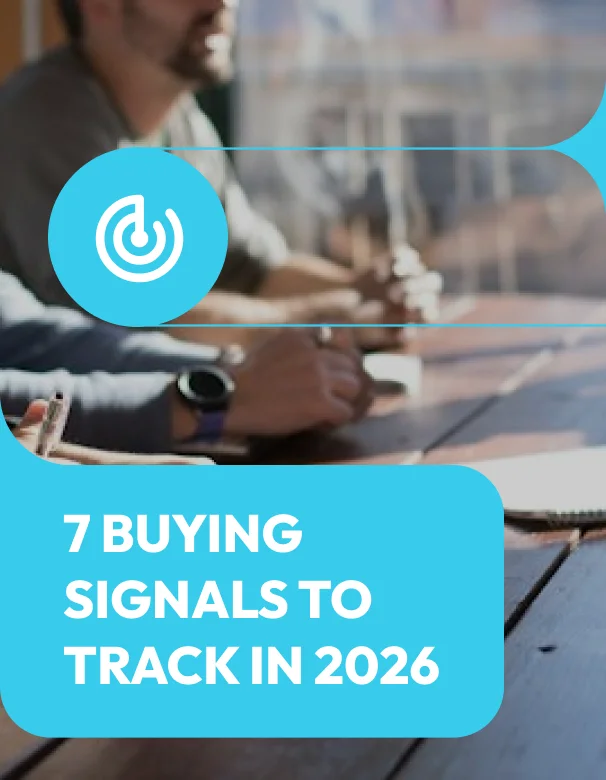
Most sales teams are sitting on more buying signals than they realize. The problem isn’t a lack of data; it’s that reps are still prioritizing outreach based on gut feel, a warm list, or whoever answered the phone last time, while the real indicators of purchase intent quietly pile up unread in a CRM field or an analytics dashboard.
In 2026, the gap between teams that close efficiently and teams that chase cold leads for months usually comes down to one thing: knowing which buying signals actually matter, and building a process to act on them fast.
This article breaks down what buying signals are, how they differ from general intent data, the seven specific signals worth tracking this year, and a practical way to build them into your sales process — so your team spends time on accounts that are actually ready, not just accounts that are available.
A buying signal is any observable action, event, or change that suggests a company or individual is actively moving toward a purchase decision in your category. It’s the digital and behavioral equivalent of a prospect raising their hand.
Buying signals generally fall into a few categories:
Not every signal carries the same weight. A single blog visit tells you almost nothing. A pricing page visit followed by a demo request and a question about integrations tells you a great deal. The skill isn’t spotting one signal — it’s recognizing when several stack together into a genuine buying window.
A buying signal in B2B sales is any action, event, or behavior — such as a pricing page visit, demo request, or funding announcement — that indicates a company or individual is actively evaluating a purchase in your category, rather than simply aware of your brand.
These terms get used interchangeably, but they’re not quite the same thing, and mixing them up leads to messy prioritization.
Intent data is typically a narrower, behavioral category that refers specifically to research activity, like a company searching category keywords, reading comparison content on third-party sites, or browsing review platforms such as G2 or Capterra. It’s usually sourced from external data providers and shows interest in a category, not necessarily interest in your company.
Buying signals is the broader umbrella. It includes intent data, but also trigger events (funding, hiring, leadership changes), technographic shifts, and direct engagement with your own brand (pricing page visits, demo requests, email replies).
Put simply: all intent data is a type of buying signal, but not all buying signals are intent data. A company searching “sales engagement platform comparison” is showing intent. A company that just hired a new VP of Sales is showing a buying signal — even if they haven’t searched for anything related to you yet.
Intent signals are a subset of buying signals focused specifically on research and search behavior. Buying signals is the broader category, also including business trigger events, technographic changes, and direct engagement with your website or sales team.
Here’s where it gets practical. These seven signals consistently separate accounts that are ready to talk from accounts that are still just browsing.
This remains one of the clearest behavioral signals available. Someone doesn’t land on a pricing page by accident; they’re mentally budgeting. A single visit is worth noting; repeat visits, especially from multiple people at the same company, are worth an immediate outreach trigger.
Demo requests are about as explicit as a buying signal gets. The prospect is directly telling you they want to see the product in action. What matters here is speed — teams that respond within minutes convert meaningfully better than teams that let a request sit in a queue overnight.
When a prospect visits your comparison pages, searches “[your category] vs [competitor],” or engages with review sites comparing vendors, they’re in active evaluation mode. This is a strong cue to position around differentiation rather than generic education.
A company that just closed a funding round often has a fresh budget and a mandate to grow quickly. Funding alone is a medium-strength signal; it’s much stronger when paired with hiring activity or a new executive who typically owns the buying decision for your category.
New leadership, particularly at the VP level and above, tends to trigger a review of existing tools and vendors within the first 90 days. A new VP of Sales often means the outbound stack is under evaluation. A new CIO or CTO usually means infrastructure and security tooling gets a fresh look. This is one of the more reliable — and most underused — signals in enterprise sales.
A sudden increase in someone reading multiple blog posts, downloading a guide, or attending a webinar over a short window is different from steady, low-level engagement over months. Spikes in content consumption often precede a formal evaluation process, especially when the content touches specific pain points your product solves.
Tracking what tools a prospect adds, drops, or integrates can reveal upcoming needs before they’ve even started actively looking. A company that just adopted a new CRM, for example, is a strong candidate for complementary tools that integrate with it — and a weak candidate for anything that competes with what they just bought.
Enterprise deals move differently than SMB deals, so the signal hierarchy shifts too. For enterprise sales specifically, a few signals tend to carry outsized weight:
For enterprise teams, the goal isn’t reacting to a single signal, it’s building a composite score that weighs multiple signals together, since enterprise buying committees rarely move on one action alone.
Knowing the signals is only half the job. Here’s a practical approach to actually operationalizing them:
Centralize signal sources. Pull website analytics, CRM activity, intent data providers, and firmographic tools into one place your team actually checks — scattered dashboards get ignored.
Score signals by strength, not just presence. A pricing page visit and a demo request shouldn’t trigger the same response. Build a simple tiering system — high, medium, low intent — and define a response time for each tier.
Automate the alert, not the outreach. Set up real-time alerts for high-intent signals so reps aren’t manually checking dashboards, but keep the actual outreach message human and specific to the signal that triggered it.
Layer signals instead of acting on one. A funding announcement alone is weak. A funding announcement plus a new VP hire plus a pricing page visit is a strong composite signal worth prioritizing immediately.
Review and recalibrate quarterly. Signal strength shifts as your market and ICP evolve — a signal that predicted deals well last year may weaken as buyer behavior changes.
Buying signals are observable actions, events, or changes — like a pricing page visit, a demo request, or a funding announcement — that indicate a company or contact is actively moving toward a purchase decision, rather than simply aware of your brand.
Intent signals are a narrower category focused on research behavior, like search activity or content consumption. Buying signals is the broader umbrella that also includes business triggers, technographic changes, and direct engagement with your company.
There’s no single universal answer, but explicit, direct signals — demo requests, pricing inquiries, RFPs — generally warrant the fastest response, since they represent a prospect telling you outright that they’re evaluating a purchase.
It varies by company, but a single low-intent signal (a blog visit, an email open) rarely justifies a sales pitch on its own. Most effective teams look for two or more signals stacking together, for example, a funding announcement paired with a pricing page visit — before treating an account as sales-ready.
Yes. Website analytics, CRM activity logs, and manual tracking of public events like funding announcements and executive hires can get a small team most of the way there before investing in a dedicated intent data platform.
Buying signals aren’t a nice-to-have anymore; they’re the difference between a sales team that reaches out at the right moment and one that’s perpetually a step behind. The seven signals covered here — pricing page visits, demo requests, competitor research, funding announcements, executive hiring, content consumption spikes, and technology stack changes — give your team a concrete framework for prioritizing outreach based on actual buying intent, not guesswork.
Start small: pick two or three of these signals your team can track today with the tools you already have, define a response time for each, and build from there.
Want help building a buying-signal tracking system for your team?
Related articles
Outbound sales October 7, 2026 12 min read
Discover why outbound fails for most SaaS companies past €1M ARR — the ICP, messaging, and process mistakes killing your pipeline in 2026.
Read More
GTM strategy October 4, 2026 10 min read
Your ICP checks every box but deals still don't close. Here's why ICP targeting fails in B2B sales — and how to fix it with real data.
Read More
Outbound sales October 1, 2026 10 min read
Learn how to build a multi-channel outbound sequence that actually works in 2026 — channel mix, touch count, templates, and benchmarks.
Read More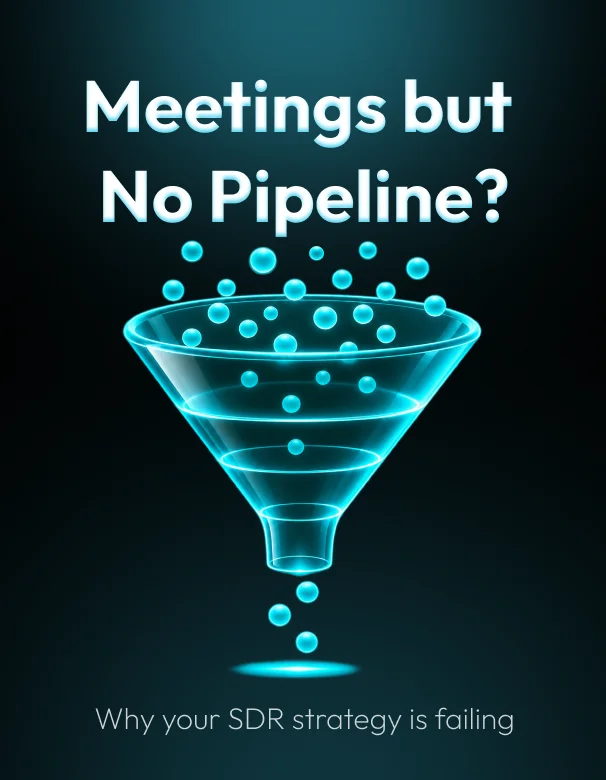
SDR September 25, 2026 10 min read
SDRs hitting their meeting quota but pipeline still falling short? Here's why booked meetings don't equal pipeline — and how to fix it.
Read More
GTM strategy September 22, 2026 11 min read
Why the foreign playbook doesn't work in Italy: cultural gaps, translation traps, and trust barriers, plus how to build an Italy-specific strategy.
Read More
Enterprise sales September 19, 2026 10 min read
Learn the best closing practices in Italy for 2026: build trust, find the real decision-maker, negotiate flexibly, and close B2B deals the Italian way.
Read More
Outbound sales September 16, 2026 11 min read
Is cold calling still effective in 2026? Get the latest benchmarks, best call times, scripts, compliance rules, and AI tips to book more meetings.
Read More
GTM strategy September 13, 2026 11 min read
Planning to sell software in Italy? This 2026 guide covers buyer behavior, business culture, outbound channels, localization, and common mistakes.
Read More
SDR September 10, 2026 11 min read
In-house vs outsourced SDR: compare cost, ramp time, control, and scalability to choose the right sales development model for your team in 2026.
Read More