Outbound sales October 7, 2026 12 min read
What €1M+ SaaS Companies Get Wrong About Outbound
Discover why outbound fails for most SaaS companies past €1M ARR — the ICP, messaging, and process mistakes killing your pipeline in 2026.
Read MoreOutbound Hub insights
October 1, 2026 10 min read

If your outbound is still one channel doing all the work, usually email — you’re leaving meetings on the table. Prospects today move across LinkedIn, their inbox, and their phone throughout the day, and a sequence that only shows up in one of those places is easy to ignore.
The teams booking the most meetings in 2026 aren’t sending more messages. They’re showing up in more places, in the right order, with a message that actually reflects where the prospect is in the sequence. That’s the entire premise behind multi-channel outbound.
This guide walks through what a multi-channel outbound sequence actually is, why it consistently outperforms single-channel outreach, how to build one step by step, how long it should run, how to measure it, and where AI and automation genuinely help, not just add noise.
A multi-channel outbound sequence is a coordinated series of touchpoints — typically spanning email, phone, and LinkedIn — sent to a prospect over a defined period, with each touch building on the one before it rather than repeating the same pitch in a different format.
The key word is coordinated. Three separate teams independently emailing, calling, and LinkedIn-messaging the same prospect isn’t a multi-channel sequence; it’s channel chaos, and prospects notice when the messaging doesn’t line up. A real sequence plans the order, timing, and content of each touch as one connected story.
A multi-channel outbound sequence is a planned series of touchpoints across two or more channels, usually email, phone, and LinkedIn — sent to a prospect in a specific order over a set number of days, designed to reinforce the same message rather than repeat it.
The case for multi-channel outbound comes down to reach and reinforcement.
Email-only sequences in 2026 tend to land in a fairly narrow reply-rate band, often somewhere in the low single digits. Add a LinkedIn touch to the same prospect and reply rates commonly lift meaningfully — largely because the prospect now recognizes your name from two places instead of one. Layer in a phone touch and the lift compounds further, since a voice attached to a familiar name changes how a cold call lands.
There’s also a deliverability argument. Spreading touches across channels keeps email volume per prospect lower, which protects sender reputation and keeps bounce and spam-complaint rates in a safer range, both of which inbox providers use to judge whether you’re a legitimate sender.
And practically: not every prospect checks email first. Some live on LinkedIn. Some only answer calls from numbers they don’t recognize if a name already feels familiar. A prospect who ignores three calls might still reply to an email referencing the same problem — and a prospect who skips your email might pick up the fourth call because your earlier LinkedIn touch made your name recognizable. Each channel covers the gaps the others leave.
Before building the sequence itself, a few components need to be in place:
Everything downstream depends on this step. A signal-driven, ICP-matched prospect list — built from firmographic fit plus active buying signals like funding events, hiring activity, or technology changes — will outperform a broad, loosely-qualified list running the exact same sequence. Get specific about company size, industry, tech stack, and the roles most likely to feel the problem you solve.
Most effective B2B sequences center on three to four channels: email, phone, LinkedIn, and sometimes SMS or a personalized video touch for high-value accounts. The right mix shifts by deal size and industry — enterprise SaaS tends to lean more heavily on LinkedIn, trade and service businesses often lean harder on phone, and consultative B2B sits somewhere in between.
Write the touches as one narrative, not six unrelated pitches. Each message should reference what came before it — “following up on the email I sent Tuesday” — so the prospect experiences one coordinated outreach, not a barrage from a company that can’t keep its own story straight.
Lay out the day-by-day order: which channel fires on which day, and how the message evolves — problem-focused early, proof-focused in the middle, direct ask toward the end, breakup message to close it out.
Not every touch needs deep personalization, but the first email, the LinkedIn connection note, and the first call opener should reference something specific to the account: a buying signal, a shared connection, a relevant trigger event. Generic touches are fine as reinforcement; the opening touches need to earn attention.
If multiple reps or teams touch the same account — an SDR on outbound and an AE on a warm intro, for example — make sure the sequence tooling flags overlap so the prospect isn’t hit with duplicate or conflicting messages in the same week.
Here’s a practical 8–12 touch structure spread across roughly 17–21 days — a widely used baseline for B2B outbound:
| Day | Channel | Touch |
|---|---|---|
| 1 | Personalized opener tied to a specific signal or pain point | |
| 1 | Connection request (no pitch yet) | |
| 3 | Phone | First call attempt, reference the email |
| 5 | Follow-up with a proof point or case example | |
| 7 | Direct message after connection accepted | |
| 9 | Phone | Second call attempt, different time of day |
| 12 | Value-add touch — resource, insight, or relevant trigger | |
| 14 | Phone | Third call attempt |
| 17 | Short, casual check-in message | |
| 20 | Breakup email — clear, low-pressure close-out |
This is often referred to informally as a “triple tap” approach when the same day includes coordinated touches across two channels — for example, an email followed by a LinkedIn connection request on day one. Adjust touch count and spacing based on deal size: enterprise sequences often run longer and lighter, mid-market sequences run tighter and faster.
For most B2B outbound in 2026, the sweet spot is 8 to 12 total touches spread across roughly 17 to 21 days. Shorter sequences under five touches leave meaningful reply volume on the table, since a large share of replies come after the first or second attempt, not the opener. Sequences stretched past 12–15 touches see diminishing returns; the incremental reply rate gained is small relative to the risk of feeling like harassment rather than persistence.
A well-built B2B multi-channel outbound sequence typically runs 8 to 12 touches across 3 to 4 channels over 17 to 21 days. Fewer touches under-deliver on reply volume; more than 12–15 touches produce diminishing returns.
Track performance at both the channel level and the sequence level:
Breaking narrative continuity. Touches that don’t reference each other feel like separate, disconnected campaigns rather than one coordinated outreach.
Front-loading too much volume into one channel. Six emails and one LinkedIn touch isn’t multi-channel, it’s email with a LinkedIn afterthought.
Ignoring deliverability limits. Sending too many cold emails per domain per day, or too many LinkedIn connection requests too quickly, damages sender reputation and results in the whole sequence.
Skipping the breakup email. A clear, low-pressure close-out message often produces a final wave of replies from prospects who were busy, not uninterested.
Using stale or unverified contact data. No sequence design fixes a bad email address or an outdated phone number.
Treating every account the same. An enterprise sequence and a mid-market sequence shouldn’t share the exact same touch count, channel mix, or timeline.
AI has become genuinely useful in a few specific parts of the multi-channel outbound process:
The caution worth repeating: AI-driven volume without human judgment on the actual message tends to increase send counts while dragging down reply and meeting-to-opportunity rates. The strongest setups use AI to handle research, coordination, and monitoring, while keeping a human hand on the words a prospect actually reads.
It’s a coordinated series of touchpoints across two or more channels, typically email, phone, and LinkedIn — sent to a prospect in a planned order over a set number of days, with each touch building on the last.
Most effective B2B sequences run 8 to 12 total touches across 3 to 4 channels over roughly 17 to 21 days. Fewer touches leave reply volume on the table; many more produce diminishing returns.
Single-channel outreach relies on one method, usually email, for every touch. Multi-channel outreach spreads across email, phone, and LinkedIn (and sometimes SMS), which generally produces meaningfully higher reply rates than any one channel alone.
There’s no universal rule, but many high-performing sequences lead with either email or a LinkedIn connection request to build initial familiarity, then bring in a phone once the prospect has some context for who’s calling.
Yes. Enterprise sequences typically run longer, involve more personalization, and lean more heavily on LinkedIn and multi-threaded outreach across a buying committee. Mid-market sequences tend to move faster with a tighter touch count and heavier reliance on phone and email.
A multi-channel outbound sequence isn’t about doing more, it’s about doing outreach in the places your prospects actually are, in an order that builds familiarity instead of starting cold every time. Get the ICP right, choose a realistic channel mix, write the touches as one story instead of six pitches, and give the sequence enough time — and restraint — to actually work.
Start by mapping your current sequence against the 8–12 touch, 3–4 channel structure above, and identify the one channel gap most likely to move your reply rate.
Want help building a multi-channel outbound sequence for your team?
Related articles
Outbound sales October 7, 2026 12 min read
Discover why outbound fails for most SaaS companies past €1M ARR — the ICP, messaging, and process mistakes killing your pipeline in 2026.
Read More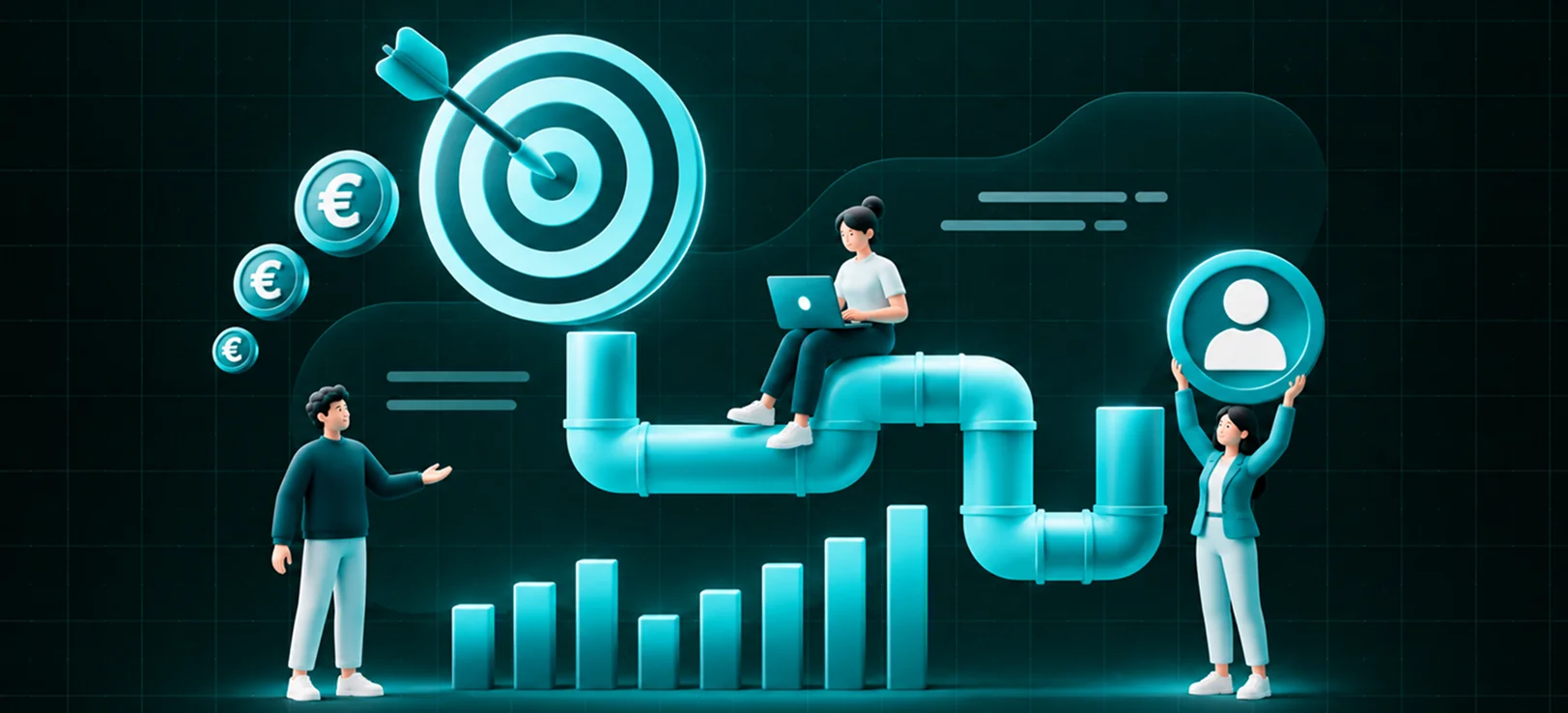
GTM strategy October 4, 2026 10 min read
Your ICP checks every box but deals still don't close. Here's why ICP targeting fails in B2B sales — and how to fix it with real data.
Read More
Lead generation September 28, 2026 9 min read
Learn the 7 buying signals your sales team should track in 2026 — from pricing page visits to executive hires — and how to act on each one.
Read More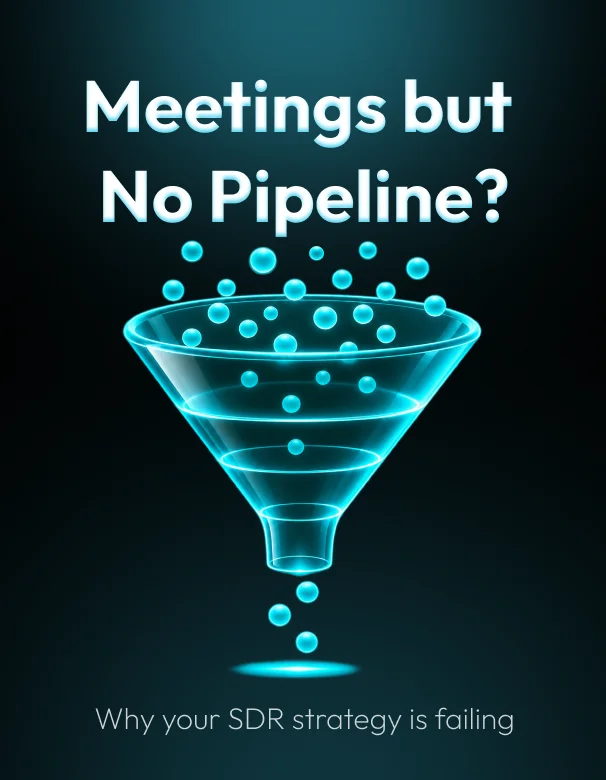
SDR September 25, 2026 10 min read
SDRs hitting their meeting quota but pipeline still falling short? Here's why booked meetings don't equal pipeline — and how to fix it.
Read More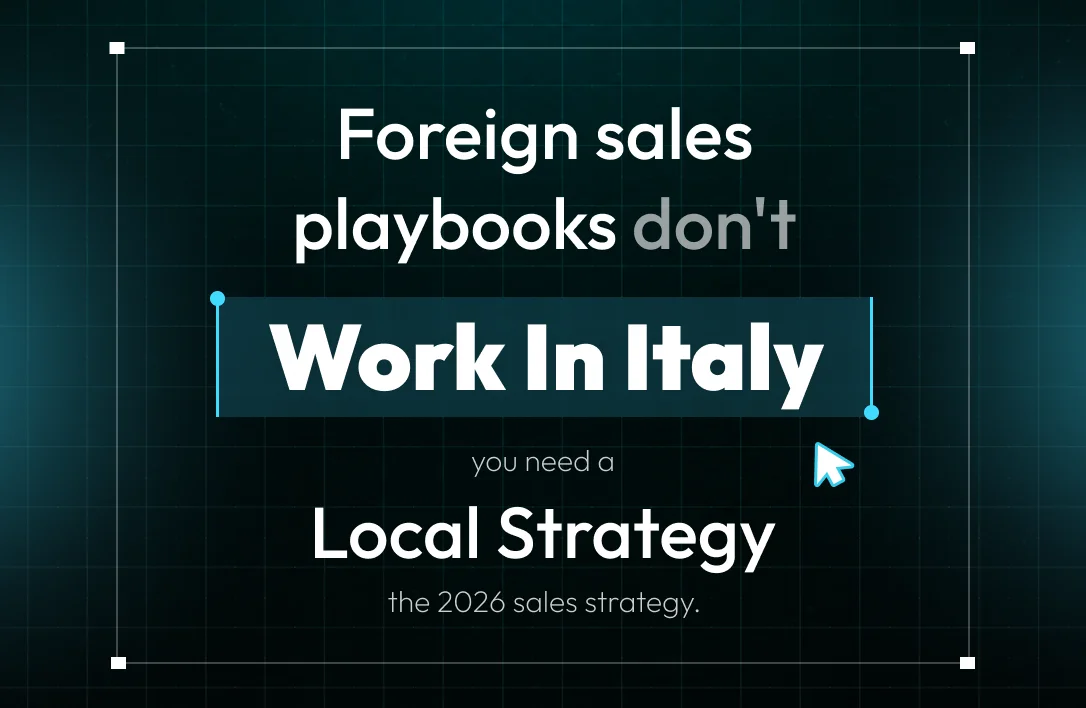
GTM strategy September 22, 2026 11 min read
Why the foreign playbook doesn't work in Italy: cultural gaps, translation traps, and trust barriers, plus how to build an Italy-specific strategy.
Read More
Enterprise sales September 19, 2026 10 min read
Learn the best closing practices in Italy for 2026: build trust, find the real decision-maker, negotiate flexibly, and close B2B deals the Italian way.
Read More
Outbound sales September 16, 2026 11 min read
Is cold calling still effective in 2026? Get the latest benchmarks, best call times, scripts, compliance rules, and AI tips to book more meetings.
Read More
GTM strategy September 13, 2026 11 min read
Planning to sell software in Italy? This 2026 guide covers buyer behavior, business culture, outbound channels, localization, and common mistakes.
Read More
SDR September 10, 2026 11 min read
In-house vs outsourced SDR: compare cost, ramp time, control, and scalability to choose the right sales development model for your team in 2026.
Read More